 New Zealand
Free NZ learner licence practice test
55 practice questions based on the road rules in New Zealand. Pick an answer to see whether you're right, and why. No sign-up needed.
These are Learner Lane's own practice questions, not official exam questions. Always study your official handbook too.
0 of 55 answered · 0 correct
1/55
You are driving in heavy rain and the car starts to aquaplane (hydroplane). What should you do?
Show answer
Ease off the accelerator and hold the steering straight. Braking or steering sharply while the tyres are riding on water can cause a skid. Ease off gently until grip returns.
2/55
An emergency vehicle with flashing lights and siren is coming up behind you. What should you do?
Show answer
Move out of its way safely when it is safe and legal to do so. Help it pass by moving over when you safely can. Do not brake suddenly or break other rules, such as running a red light, to make room.
3/55
What is the main reason to check your blind spot before changing lanes?
Show answer
Mirrors do not show every area beside and behind the car. A quick look over your shoulder covers the area your mirrors cannot show.
4/55
You feel tired on a long drive. What is the safest thing to do?
Show answer
Stop somewhere safe and rest. Fresh air and music do not fix fatigue. Stop in a safe place and rest.
5/55
Why should you leave a bigger gap to the vehicle in front in wet weather?
Show answer
Wet roads increase stopping distance. Tyres have less grip on wet roads, so it takes longer to stop.
6/55
A ball bounces into the road ahead from between parked cars. What should you expect?
Show answer
A child may run out after it. Slow down and be ready to stop: a child chasing the ball may not look for traffic.
7/55
When is it acceptable to use a hand-held phone while driving?
Show answer
When safely parked with the engine off, or to call emergency services when it is unsafe to stop. Hand-held phone use while driving is illegal in the UK, Ireland, Australia, New Zealand, Canadian provinces and most US states – including when stopped in traffic – and it is always dangerous.
8/55
You are waiting to turn and a pedestrian is crossing the road you are turning into. Who has priority?
Show answer
The pedestrian. Give way to pedestrians crossing the road you are turning into.
9/55
What should you do if your car starts to skid on a slippery road?
Show answer
Take your feet off the pedals and steer smoothly where you want to go. Smooth inputs let the tyres regain grip. Harsh braking or steering usually makes a skid worse.
10/55
Red lights are flashing at a railway (railroad) level crossing. What must you do?
Show answer
Stop and wait until the lights stop flashing. Flashing red lights mean a train is coming. Stop and stay stopped until the lights go off and it is safe.
11/55
You are about to open your car door on a busy street. What should you do first?
Show answer
Check mirrors and look over your shoulder for cyclists and traffic. Opening a door into the path of a cyclist or car can cause a serious crash. Look before you open it.
12/55
A tyre bursts while you are driving. What should you do?
Show answer
Hold the steering firmly and slow down gradually. Grip the wheel, ease off the accelerator and let the car slow down before braking gently and pulling over.
13/55
When should you dip (lower) your headlights from high beam at night?
Show answer
When a vehicle is coming towards you or you are following close behind one. High beams dazzle other drivers. Dip them for oncoming traffic and when following another vehicle.
14/55
You see children playing near the road ahead. What should you do?
Show answer
Slow down and be ready to stop. Children can run into the road without warning. Slow down and be ready to stop.
15/55
Which of these is most likely to affect your reaction time?
Show answer
Alcohol, drugs or tiredness. Alcohol, some medicines, drugs and fatigue all slow your reactions and impair judgement.
16/55
Why should every passenger wear a seat belt, including those in the back seats?
Show answer
An unbelted passenger can be thrown forward in a crash and injure themselves and others. In a crash an unbelted body keeps moving at the car's speed. Rear passengers without belts can hit the people in front with great force.
17/55
Where must a rear-facing baby seat never be fitted?
Show answer
In a front seat with an active frontal airbag. A deploying airbag can strike the back of a rear-facing seat and seriously injure the baby. Switch the airbag off or use a back seat.
18/55
A driver is following you far too closely. What is the safest thing to do?
Show answer
Gradually increase the gap in front so you can brake more gently, and let them pass. A bigger gap ahead means you are less likely to need to brake hard, which keeps the tailgater from running into you.
19/55
When should you signal before turning or changing lanes?
Show answer
In good time, after checking your mirrors, so others can see and react. Mirrors, then signal, then the manoeuvre. Signal early enough to be useful, but not so early it is confusing.
20/55
At night, the headlights of an oncoming vehicle dazzle you. What should you do?
Show answer
Slow down, look towards the edge of the road on your side, and stop if you need to. Looking away from the glare towards your side of the road helps you keep your position until your eyes recover.
21/55
Why should you not use high beams in thick fog?
Show answer
The light reflects off the fog and makes it harder to see. Use dipped (low-beam) headlights in fog, and fog lights if fitted and visibility is seriously reduced.
22/55
Which of these makes your braking distance much longer?
Show answer
An icy road. On ice, braking distances can be up to ten times longer than on a dry road. Slow down and leave a much bigger gap.
23/55
What is the only thing that removes alcohol from your body?
Show answer
Time. Your body clears alcohol at a fixed rate. You may still be over the limit the morning after drinking.
24/55
A medicine you have taken warns that it may cause drowsiness. What should you do?
Show answer
Not drive until you know how it affects you, and ask a doctor or pharmacist. Some medicines slow your reactions as much as alcohol. Driving while impaired by medicine is an offence in many countries.
25/55
Your car has ABS (anti-lock brakes). How should you brake in an emergency?
Show answer
Brake firmly and keep your foot down – you can still steer. ABS stops the wheels locking so you can keep steering. Keep firm pressure on the pedal; a pulsing feel is normal.
26/55
Why should you not coast downhill with the car in neutral or the clutch pressed?
Show answer
You lose engine braking and have less control. Coasting lets the car speed up and puts all the work on the brakes. Stay in a suitable gear.
27/55
When is the best time to check your tyre pressures?
Show answer
When the tyres are cold, using the figures in the handbook or on the door sticker. Warm tyres give a higher reading. Correct pressures help braking, steering and fuel use.
28/55
A red warning light comes on in your dashboard while driving. What should you do?
Show answer
Stop as soon as it is safe and find out what it means. Red warning lights mean a serious problem, such as brakes, oil pressure or overheating. Check the handbook before driving on.
29/55
The road ahead is flooded and you cannot tell how deep the water is. What should you do?
Show answer
Find another route if you can. Moving water can float a car and hide a damaged road. If you must go through shallow water, go slowly and test your brakes afterwards.
30/55
A long lorry (truck) ahead is signalling to turn at a junction. Why should you hang back?
Show answer
It may swing out wide, or across lanes, before it turns. Long vehicles need extra room to turn and the driver may not see you beside the trailer.
31/55
Why should you look carefully for motorcycles at junctions?
Show answer
They are small, easy to miss and their speed is hard to judge. Many crashes happen when drivers pull out in front of a motorcycle they did not see. Take a second look.
32/55
You are about to pass a person riding a horse. What should you do?
Show answer
Pass slowly and give them plenty of room. Horses can be startled by noise or speed. Slow down, pass wide and do not rev or sound the horn.
33/55
An elderly pedestrian is crossing slowly in front of you when the light turns green. What should you do?
Show answer
Wait patiently until they have finished crossing. Older people may need more time to cross. Never rush or threaten a pedestrian with your vehicle.
34/55
How can you judge a safe following distance on a dry road?
Show answer
Count at least two to three seconds after the vehicle ahead passes a fixed point. A time gap grows with speed, unlike a fixed distance. Leave at least twice as much in the wet.
35/55
Driving at night on an unlit road, how fast should you go?
Show answer
So that you can stop within the distance you can see to be clear. Do not overdrive your headlights: if something appears at the edge of your lights, you must be able to stop before it.
36/55
Another driver is angry and gesturing at you. What should you do?
Show answer
Stay calm, do not react or make eye contact, and keep your distance. Responding can turn a moment into a crash or a fight. Let them go and carry on calmly.
37/55
How should a dog travel in your car?
Show answer
Suitably restrained, such as with a harness or in a crate. A loose animal can distract you and becomes a projectile in a crash.
38/55
You arrive first at the scene of a crash. What should you do first?
Show answer
Make the scene safe – warn other traffic, switch off engines – and call the emergency services. Protect yourself and others from further crashes, then get help. Do not put yourself in danger.
39/55
Should you move a person injured in a crash?
Show answer
Only if they are in immediate danger, such as from fire. Moving an injured person can make spinal injuries worse. Keep them still, warm and reassured until help arrives.
40/55
Your car stalls on a level crossing and will not restart. What should you do first?
Show answer
Get everyone out and well clear of the crossing, then call for help. Get people out first. Then use the railway emergency phone or number to warn the railway.
41/55
When should you set up your phone's navigation?
Show answer
Before you set off, with the phone fixed in a holder. Setting a route while moving takes your eyes and mind off the road. Do it before you leave.
42/55
In which conditions should you avoid using cruise control?
Show answer
In heavy traffic or on wet or icy roads. Cruise control can slow your reaction and is unsafe when grip is low or traffic keeps changing speed.
43/55
In New Zealand, when you are turning right, you must give way to:
Show answer
Vehicles coming towards you that are turning left. Since the give-way rule change of 25 March 2012, a driver turning right gives way to oncoming vehicles turning left into the same road, as well as to oncoming traffic going straight on.
44/55
A learner licence holder driving a car must be accompanied by a supervisor who:
Show answer
Holds a full licence and has held it for at least 2 years. The supervisor must hold a full licence and have held it for at least two years.
45/55
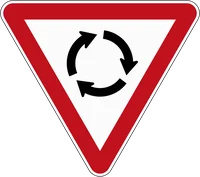
At a roundabout you must give way to:
Show answer
Vehicles coming from your right. Give way to all vehicles coming from your right on the roundabout.
46/55
At a T-intersection with no signs, who gives way?
Show answer
Traffic on the road that ends gives way to all traffic on the continuing road. If you are on the road that ends, give way to all vehicles on the continuing road.
47/55
How fast may you pass a school bus that has stopped to let children on or off?
Show answer
20 km/h, in either direction. You must not pass a stationary school bus at more than 20 km/h, whichever way you are travelling.
48/55
What is the alcohol limit for drivers under 20?
Show answer
Zero. Drivers under 20 must not drive with any alcohol in their system.
49/55
What is the blood alcohol limit for drivers aged 20 and over?
Show answer
50 mg per 100 ml of blood. Drivers 20 and over may have up to 50 mg per 100 ml of blood (250 micrograms per litre of breath).
50/55
On a restricted licence, when may you not drive alone?
Show answer
Between 10 pm and 5 am. Restricted drivers must not drive between 10 pm and 5 am unless a supervisor is with them or they have an exemption.
51/55
What must be displayed on a car driven by a learner licence holder?
Show answer
An L plate. Learner drivers must display an L plate where it can be clearly seen from behind.
52/55
What following distance does the Road Code recommend in good conditions?
Show answer
At least two seconds. Keep at least a two-second gap, and at least four seconds in wet weather.
53/55
How may you use a flush median (the painted area in the middle of some roads)?
Show answer
To slow down and wait while turning into or out of a side road, for no more than 50 metres. Use the flush median to turn; do not drive along it for more than 50 metres or use it to pass.
54/55
Which vehicle inspection must most cars have to be driven on the road?
Show answer
A current warrant of fitness (WoF). Cars need a current WoF (or certificate of fitness) and registration to be on the road.
55/55
You come across stock (sheep or cattle) being moved along a rural road. What should you do?
Show answer
Slow down or stop, and follow the directions of the person in charge. Move slowly and quietly, and follow any signals from the farmer.
NZ learner licence practice test FAQ
Are these the official NZ learner licence test questions?
No. They're original practice questions written by Learner Lane to match the road rules in New Zealand. The real test uses its own question bank, so study your official handbook too.
Is this practice test free?
Yes. All 55 questions on this page are free, with no sign-up. The Learner Lane app adds 2 free hazard clips and 15 quiz questions a day, plus 3D road situations.
How should I prepare for the NZ learner licence test?
Read your official handbook, answer a few practice questions every day, and read the explanation for every answer you get wrong. Seeing the rules in real road situations, like Learner Lane's 3D levels, helps them stick.
Walk in ready. Pass first try.
Start free with the Road signs chapter, daily hazard clips and quiz questions. Unlock everything once, no subscription needed.
Scan with your iPhone camera to download