G2 road test (Ontario): what's on it, what to bring and why people fail
· 12 min read
The G2 road test is the first of Ontario's two road tests: you take it while you hold a G1, and passing it gets you a G2 licence. It's a short drive with a DriveTest examiner that checks basic skills: turns, stops, intersections, lane changes, parallel parking, a three-point turn and residential streets. You can take it after 12 months with your G1, or after 8 months if you complete a ministry-approved beginner driver education course. Here's how to book it, what to bring, what the examiner checks, what stops a test before it starts, and what changes once you pass, all checked against ontario.ca and DriveTest.
What is the G2 road test?
Ontario uses graduated licensing. You pass a vision test and a knowledge test to get a G1, then two road tests to become fully licensed. The first road test moves you to Level Two (a G2 licence), and the second gives you full Class G privileges. The whole process takes at least 20 months, and you have up to five years to finish it.
The names get confusing, even on official pages. ontario.ca calls the first test the "G2 road test (G1 exit test)" and also the "G1 road test", while the handbook's Level Two chapter uses "G2 road test" for the second test, the one you take while holding a G2. In this guide, the G2 road test means the first one: the test that gets you a G2.
| G2 road test | G road test | |
|---|---|---|
| You hold | A G1 | A G2 |
| Also called | G1 exit test, G1 road test, Level One road test | G2 exit test, Level Two road test |
| Earliest | 12 months with a G1, or 8 with an approved course | 12 months with a G2 |
| What it checks | Basic driving skills | More advanced skills, including highway driving |
| Usual length | About 20 minutes | About 30 minutes |
| Pass and you get | A G2 licence | A full G licence |
The test lengths are DriveTest's figures at the time of writing. The highway part, and the Declaration of Highway Driving Experience form that comes with it, belong to the G road test, not the G2.
When can you take the G2 road test?
You can take your first road test after 12 months with a G1 licence. If you finish a government-approved beginner driver education (BDE) course, it's noted in your driver's licence history and cuts four months off Level One, so you can take the test after eight months.
A ministry-approved BDE course must include at least 40 hours of instruction: at least 20 hours in class, 10 hours in the vehicle and 10 hours of flexible instruction. To take the test sooner, ontario.ca says you need a driving school that's certified to train new drivers, so check it's on the list of government-approved driving schools before you pay. The handbook adds that a BDE course may also bring savings on your car insurance.
Still on your G1 knowledge test? Start with our G1 test guide, which covers the 80% pass mark, the vision test and the G1 rules.
How to book your G2 road test
You book, cancel or reschedule road tests with DriveTest: online, by phone at 647-776-0331 or 1-888-570-6110, or at any DriveTest Centre. Have these ready:
- your Ontario driver's licence number, including the expiry date
- your preferred test location, plus a second and third choice
- your preferred date and time
You prepay the fee to book. The Ministry of Transportation and DriveTest don't charge a fee to book a road test, and the handbook warns against sites or services that promise a licence without testing, guarantee a pass, or charge more than the fees posted on ontario.ca and drivetest.ca.
Cancel or reschedule at least 48 hours before your appointment. With less notice, or if you don't show up, the prepaid fee isn't refunded. Only in extenuating circumstances, such as a death in your immediate family, does the fee stay as a credit on your driving record.
What to bring to the G2 road test
The handbook's G1 exit test checklist, and DriveTest's road test page at the time of writing, list:
- A vehicle in good working order. DriveTest centres don't supply one. It can be owned, borrowed or rented, and it must be fit, in proper working condition, plated and insured.
- Your current licence and a printout of your road test confirmation email.
- An accompanying driver. As a G1 driver, you need one to come with you to the test centre.
- Glasses or contact lenses, if you need them to drive.
- Enough fuel for the test.
- Money for fees, if any apply, for example if you're hoping for a standby appointment.
Arrive at least 30 minutes before your appointment. For a wider checklist, see what to bring to your driving test.
Your accompanying driver comes to the centre but not on the drive: only the examiner rides with you. No passengers or pets, and no driving instructors, friends, relatives or translators. DriveTest also says recording devices such as phones, dashboard cameras and action cameras aren't allowed during road tests and must be switched off.
The car check before you drive
The examiner checks the vehicle first, and may ask you to help test the turn signals and brake lights. If the vehicle doesn't meet Ministry standards, the examiner declares the test out-of-order: you lose 50% of the fee, the other 50% stays as a credit on your record, and you pay the missing half to book again. DriveTest's vehicle requirements page lists defects that lead to an out-of-order at the time of writing, including:
| Area | What gets a test declared out-of-order |
|---|---|
| Lights | A brake light, turn signal, headlight or tail light that doesn't work |
| Controls | A foot brake, horn or speedometer that doesn't work |
| Tires | A flat tire, or a temporary spare |
| Glass and body | A badly cracked or damaged windshield, a missing mirror or a missing rear bumper |
| People and pets | Anyone other than the examiner in the vehicle |
| Anything else | Any defect that affects the safe operation of the vehicle |
The same rules apply to a borrowed or rented car, including a driving instructor's. If you're unsure, contact the DriveTest Centre before your test.
What the examiner checks on the G2 road test
ontario.ca says the G2 road test checks basic driving skills such as:
- turning left and right
- stopping
- parallel parking
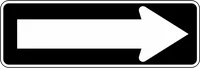
- one-way streets
- lane changes
- 3-point turns
- driving in residential neighbourhoods
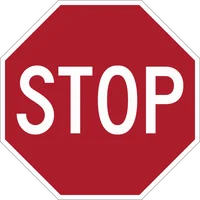
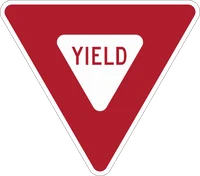
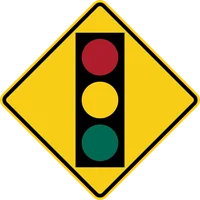
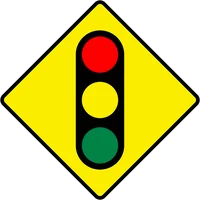
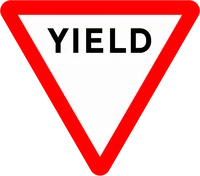
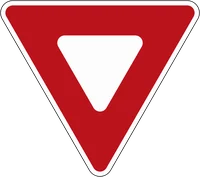
- traffic lights, stop and yield signs
The examiner gives you directions and won't ask you to do anything illegal. They aren't allowed to coach you, so ask any questions before you start. DriveTest says its examiners use a set of predefined test routes, driver tasks and scoresheets. You also can't lean on electronic driving aids: automatic parallel-parking systems, lane monitoring, cruise control and back cameras may not be used, so your shoulder and mirror checks have to do the work.

The handbook's detailed road test chapter is written for the Level Two test, but it describes the same tasks, and it says parallel parking, roadside stops, the 3-point turn and residential driving are "already covered in the G2 road test". Here's what it expects on each one:
| Task | What the handbook expects |
|---|---|
| Left and right turns | Check mirrors before slowing, move into the far left or far right lane early, signal before slowing, and keep 2 to 3 seconds behind the car ahead. Turn with both hands into the matching lane without crossing lane markings or curbs, then check mirrors as you speed up. |
| Stops | Stop completely, without rolling forward or back. Stop at the stop line; with no line, at the crosswalk; with no crosswalk, at the edge of the sidewalk or intersection. If you stop past the line, don't back up. |
| Waiting to turn left | Keep your front wheels straight. With them turned left, your car could be pushed into oncoming traffic. |
| Intersections | Look left, ahead and right just before you enter. Move off within 4 to 5 seconds once it's safe. Don't change lanes in the intersection or swing out around a car turning left. |
| One-way streets | Turning left from a one-way road onto another one-way road, go from the left curb lane to the left curb lane. From a two-way road onto a one-way road, end in the left curb lane. |
| Lane changes | Check mirrors and your blind spot, signal, check the blind spot once more, then move smoothly into the centre of the new lane and cancel the signal. |
| Roadside stop | Check that stopping is legal, signal, and stop parallel to the curb, no more than about 30 cm from it. Signal off and hazard lights on, then park and set the parking brake. To leave: hazards off, left signal on, mirrors and left blind spot. |
| Parallel parking | Stop beside the car in front of the space, at least 60 cm away. Check all around and both blind spots before reversing. Don't hit the curb or touch another vehicle. |
| 3-point turn | Stop at the right curb, signal left and turn across the road, reverse once with the wheel turned sharply right, then drive off. Use the whole road, reverse only once, and don't reverse into the curb or over the shoulder. |
| Residential streets | Watch for school entrances, crossings and driveways, check mirrors every 5 to 10 seconds, keep to the centre of the lane, and look 12 to 15 seconds ahead. |
The handbook's chapter on getting your licence adds what all road tests check: starting, stopping and turning; traffic signs and lights; passing vehicles, including bicycles; controlled and uncontrolled intersections; parallel parking and reversing; and foreseeing hazardous conditions and being ready for them.
Why people fail the G2 road test
Neither ontario.ca nor DriveTest publishes a pass mark, a points scale or a list of the most common reasons people fail. What the official material does spell out is what ends a test before it starts, and the exact mistakes the handbook warns against on each task.
Before you drive:
- a vehicle defect from the list above, which gets the test declared out-of-order
- a passenger or a pet in the car
- a phone, dash cam or other recording device left on: DriveTest says they must be disabled
- cancelling with less than 48 hours' notice, or not showing up, which costs you the whole fee
On the drive, the handbook singles out these mistakes:
- Incomplete traffic checks. In its words, you haven't properly checked traffic "if another vehicle or pedestrian has the right-of-way and must take action to avoid your vehicle."
- Rolling stops, stopping in the wrong place, or backing up after you've passed the stop line.
- Going wide or short on a turn, over lane markings or curbs, or ending the turn in the wrong lane.
- Wheels turned left while you wait to make a left turn.
- Signal mistakes: signalling too late, not at all, or leaving it on after a lane change.
- Speed and space: going over the limit or driving unreasonably slowly, hesitating once the way is clear, or following closer than 2 to 3 seconds.
- Parking and turning around: hitting the curb or touching another car when parking, or reversing more than once in a 3-point turn.
- One hand on the wheel through turns, intersections and lane changes.
For the habits that cause these slips and how to drill them out, read how to pass your road test the first time.
How much does the G2 road test cost?
Your first road test is already paid for: the fee you pay when you apply for your G1 covers the knowledge test, your first road test and a five-year licensing fee. Second road tests and retests cost extra. At the time of writing, DriveTest's fee list shows $53.75 for a Class G2 road test. Fees are set by the province and can change, so check the list before you book. The road test fee is prepaid when you book, and the 48-hour and out-of-order rules above decide whether you get it back.
After you pass: G2 licence rules
Pass and you get your G2. You can now drive without an experienced driver in the car, on all Ontario roads, and at any time of day in most cases. These rules still apply:
- Zero alcohol. Your blood-alcohol level must be zero. All drivers aged 21 and under must also have zero, whatever their licence class.
- A working seatbelt for everyone. Carry only as many passengers as there are working seatbelts.
- Passenger limits if you're 19 or under, between midnight and 5 a.m.: one passenger aged 19 or under for your first six months on a G2, then up to three until you get your full G or turn 20. The limits don't apply with a fully licensed driver in the front passenger seat, or if the passengers are immediate family.
Level Two lasts at least 12 months. After that you can take the G road test for your full licence, as long as you're still inside your five years. If your G2 is about to expire before you've passed it, ontario.ca says you can take the G1 road test again and get five more years as a G2 to finish.
If you fail the G2 road test
At the end of every road test, the examiner gives you a complete report of your skills and explains any mistakes. If you fail, the report shows where you need to improve. Then:
- You must wait at least 10 days before your next test.
- You book again and pay the road test fee.
- If your G1 hasn't expired, you just retake the road test. If it has, you start all over and pay the test fees again.
DriveTest says you can take the road test as many times as you need to pass. Use the report: book your retest once the tasks it flags feel routine, not just once the 10 days are up.
Tips to pass the G2 road test
- Practise the set pieces until they're boring. Parallel parking, the 3-point turn and the roadside stop come up on demand. Run each one with your accompanying driver until you don't have to think through the steps.
- Make your checks easy to see. Turn your head for blind spots, and glance at your mirrors every 5 to 10 seconds. The examiner watches to make sure you perform each action, so make every check visible.
- Practise without the gadgets. Back cameras, parking assist and lane monitoring aren't allowed on the test, so turn them off or ignore them when you practise.
- Drive the kind of roads around your test centre. You won't know the exact route, so practise on nearby residential streets, one-way streets and busy intersections, at different times of day.
- Get the stop line right every time. Line, then crosswalk, then sidewalk edge, then intersection edge. Full stop, then creep forward to see if you need to.
- Check the car the day before. Walk around it against the out-of-order list: every light and signal, the horn, tires, mirrors and windshield. Fill the tank and switch off the dash cam.
- Ask your questions before you start. Once the test begins, the examiner can't coach you.
- Keep the rules sharp too. Right of way and signs decide plenty of road test moments. Run the free Canada practice test and the Canada road signs guide the week before.
How Learner Lane helps, and what it isn't
Learner Lane is an independent app for iPhone and Android. It isn't affiliated with the Ministry of Transportation or DriveTest, and it can't guarantee a pass. What it does is help you get ready. It plans practice routes on the real roads around your test centre with turn-by-turn voice directions: practice routes, not official test routes. It puts right of way, signs and traffic lights into short 3D driving situations where you make the call, see the consequence and rewind. Hazard perception clips train the "foreseeing hazardous conditions" part of the test, and there's a road rules quiz, Canadian road signs and a driving hours log for your practice. It's free to start, and a one-time Pass Pass purchase unlocks everything.
Sources
- ontario.ca: Get a G driver’s licence: new drivers
- Official MTO Driver’s Handbook: Getting Your Driver’s Licence
- Official MTO Driver’s Handbook: The Level Two Road Test
- Official MTO Driver’s Handbook: Changing directions
- Official MTO Driver’s Handbook: Parking along roadways
- ontario.ca: Government-approved driving schools
- DriveTest: Road Tests (cars, vans, small trucks)
- DriveTest: Road Test Vehicle Requirements
- DriveTest: Tests Overview
- DriveTest: Fees
- DriveTest: Book a Road Test
Checked 6 November 2026. DriveTest's pages couldn't be opened directly, so its test lengths, checklist, vehicle defects and fee are as DriveTest stated them at the time of writing. Rules and fees change, so check ontario.ca and drivetest.ca before your test. Learner Lane is not affiliated with the Ontario Ministry of Transportation or DriveTest.
This guide summarizes common rules. Laws vary by country, state and province, and change over time: check your official driver handbook. Learner Lane is not affiliated with any government licensing authority.