4-way stop rules: who goes first?
· 6 min read
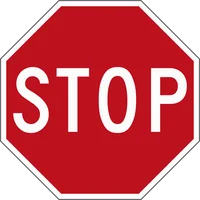
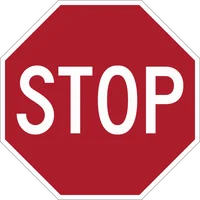
A 4-way stop (also called an all-way stop) is an intersection where every road has a stop sign. Usually there's a small plaque under each sign that reads ALL WAY or 4-WAY. Nobody has priority just because of the road they're on, so drivers take turns in a fixed order. Get the order right and 4-way stops are easy. Get it wrong and it's one of the most common ways to fail a road test.
Step 1: stop in the right place
Stop at the white stop line. If there's no line, stop before the crosswalk. If there's no crosswalk either, stop before you enter the intersection, at the point where you can see the other roads. Stopping means the wheels stop turning. Slowing to walking pace and rolling through is a "rolling stop", and examiners watch for it at every sign.
Rule 1: first to stop goes first
The order is set by when each car came to a complete stop, not by who reached the line first. If you pull up while another car is already stopped, it goes, then you. If three cars are waiting in a queue behind one stop sign, only the front car counts. The cars behind it move up and stop again at the line.
Rule 2: a tie goes to the car on the right
If you and a car on a crossing road stop at the same moment, the car on the right goes first. Look at it from your seat: a car stopped on your right gets to go before you, and a car on your left waits for you. This is the rule people forget most, and it's on almost every state's permit test.
Rule 3: facing each other, straight beats left
When two cars stop at the same time on opposite sides of the intersection:
- Both going straight, or both turning right: their paths don't cross, so both can go.
- One turning left: the left-turning car yields to the car going straight or turning right, just like at a green light.
- Both turning left: both can usually turn at the same time, as long as you each keep to your own side of the intersection. If the paths look like they'll cross, one driver waits.
Rule 4: three or four cars at once
With three cars, the "yield to the right" rule still sorts it out: the car with no one on its right goes first. If four cars stop at exactly the same moment, no one has the right of way on paper. Drivers have to communicate. Make eye contact. If someone clearly waves you on, go, but check that the others are waiting too. The right of way is something you give, never something you take.
Pedestrians, cyclists and buses
- Pedestrians in or entering a crosswalk always go first, even when it's your turn. Check both crosswalks you'll cross, especially when turning.
- Cyclists are vehicles. A cyclist who stopped before you goes before you, and you wait your turn behind one the same way you would behind a car.
- Emergency vehicles with lights and sirens override the order. Stay stopped, or clear the intersection if you're already in it, and let them through.
When a traffic light stops working
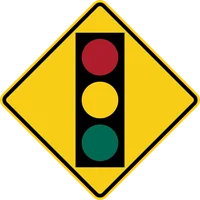
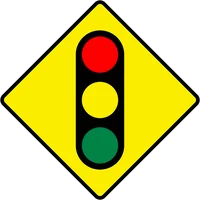
In most states, a dark traffic signal, or one flashing red in every direction, means the intersection becomes an all-way stop. The same rules apply: full stop, first to stop goes first, ties go to the right. A single flashing red light means stop, then go when it's safe. A flashing yellow light means slow down and proceed with care.
Mistakes that fail road tests
- Rolling stops. Count "one thousand one" with the car fully stopped before you look to go.
- Stopping past the line or with your front wheels in the crosswalk.
- Going out of turn because the other driver hesitated. Wait a beat. If they still don't move, go carefully.
- Waving others on when it's your turn. It feels polite, but it confuses everyone. Take your turn.
- Not looking again before you go. Check left, right, then left again, and check the crosswalks before you move.
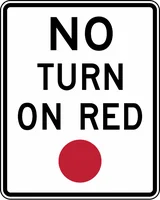
Turning right at a red light follows similar rules. See our guide to right turn on red. For everything else examiners check, read how to pass your road test.
Test yourself
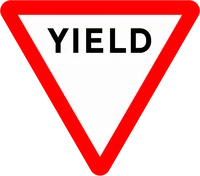
4-way stop questions turn up on permit tests in every state. Try them in our free US practice test, which uses the same question bank as the app, and learn the shapes and colors in the US road signs guide. Before you book the written test, read our guide to a practice test for your permit and find the rules you're still guessing at.
This guide summarizes common rules. Laws vary by country, state and province, and change over time: check your official driver handbook. Learner Lane is not affiliated with any government licensing authority.