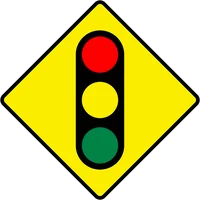
Flashing red light: what it means and what to do
· 6 min read
Flashing traffic lights confuse a lot of drivers, because they don't follow the usual green, yellow, red cycle. Signals switch to flashing mode late at night, during power or equipment problems, and at some intersections all day. The rules are simple once you know them, and they're on permit tests in every state.
What does a flashing red light mean?
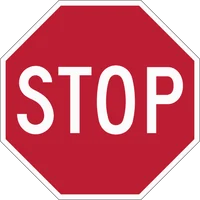
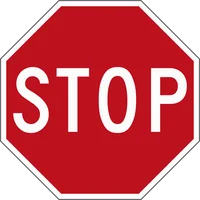
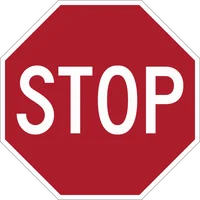
A flashing red light means stop, exactly like a STOP sign. The federal manual that sets the rules for US traffic signals (the MUTCD) says the right to go after stopping follows the same rules as after stopping at a STOP sign. California's driver handbook puts it simply: "A flashing red signal light means STOP. After stopping, you may go when it is safe."
- Stop at the stop line. If there's no line, stop before the crosswalk. If there's no crosswalk, stop where you can see the traffic on the cross street, before you enter the intersection.
- Stop completely. The wheels have to stop turning. Slowing down and rolling through a flashing red is running a red light.
- Yield to pedestrians and to any traffic that has the right of way, then go when there's a safe gap.
Flashing red in every direction
If every approach flashes red, the intersection works like an all-way stop: first to stop goes first, and if two cars stop at the same time, the car on the right goes first. All the details are in our guide to 4-way stop rules.
Flashing red one way, flashing yellow the other
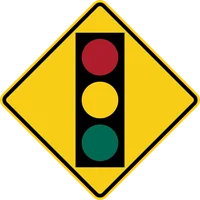
This is the most common setup at night. The MUTCD's guidance is that when a signal runs in flashing mode, the major street flashes yellow and the other approaches flash red. So if your light flashes red and the cross street's flashes yellow, you're at a two-way stop: cross traffic doesn't stop for you. Stop, wait for a real gap, then go.
Flashing red arrow
A flashing red arrow works the same way, but only for the turn it points to: stop first, then make that turn when it's safe, as you would at a STOP sign.
What does a flashing yellow light mean?
A flashing yellow light means proceed with caution. You don't have to stop, but you should slow down and be ready to. Under the MUTCD, you may enter the intersection carefully, and you must yield to pedestrians in the crosswalk and to vehicles already in the intersection.
Don't confuse it with a steady yellow, which means the light is about to turn red. At a steady yellow, stop if you can do so safely.
What does a flashing yellow arrow mean?
A flashing yellow arrow, usually for left turns, means you may turn, but you don't have the right of way. Oncoming traffic usually has a green light at the same time. In the Texas Department of Transportation's words: "Left turns allowed, but you must yield to oncoming traffic."
- Wait at the stop line and watch the oncoming lanes.
- Yield to oncoming cars, cyclists and pedestrians crossing the street you're turning into.
- Turn only when the gap is clearly big enough. If it never is, wait. The signal will change.
A steady green arrow is different: it means your turn is protected, and oncoming traffic is stopped. A steady yellow arrow means that protected time is ending.
What is a stale green light?
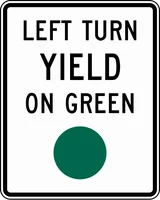
A stale green is a green light that was already green when you first saw it. It isn't a legal term or a different kind of signal, it's a defensive driving idea: because you didn't see it change, you don't know how long it has been green, so it could turn yellow at any moment.
- Ease off the gas as you approach, and cover the brake.
- Don't speed up to beat it. If it turns yellow while you can still stop safely, stop.
- Check the pedestrian signal. A flashing hand or a countdown on the crosswalk signal tells you the green is ending soon.
Even on a fresh green, don't enter the intersection unless you can get completely across before the light turns red. Getting stuck in the middle blocks the cross street.
What to do when traffic lights are out
When a signal is dark, for example during a power cut, California's handbook says: "When a traffic light is not working, stop as if the intersection is controlled by STOP signs in all directions." Many states have the same rule, but laws vary by state, so check your own driver handbook. In practice:
- Slow down early. A dark signal is easy to miss, especially at night.
- Stop completely, then take turns as at an all-way stop.
- Always follow a police officer who is directing traffic.
- A signal with its heads covered, turned or bagged isn't in service yet (or is shut down). Follow the signs that are in place instead.
Every signal at a glance
| Signal | What to do |
|---|---|
| Flashing red | Stop completely, then go when safe, as at a STOP sign |
| Flashing red arrow | Stop, then make the turn the arrow shows when safe |
| Flashing yellow | Slow down and proceed with caution; yield to pedestrians and cars in the intersection |
| Flashing yellow arrow | Turn only after yielding to oncoming traffic and pedestrians |
| Steady yellow | The light is about to turn red: stop if you can do so safely |
| Steady green arrow | Protected turn in the direction of the arrow |
| Stale green | Ease off the gas and be ready to stop |
| Signal not working | In many states, stop and treat it as an all-way stop |
On your road test
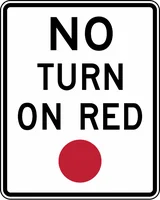
Flashing signals are a favorite way for examiners to check whether you really stop. At a flashing red, make it a full stop behind the line and turn your head to check both ways, so the examiner can see you look. At a flashing yellow arrow, wait for a gap you're sure about rather than forcing the turn. Turning at a solid red is its own set of rules: see right turn on red, and for everything else examiners check, read how to pass your road test.
Test yourself
Traffic signal questions are on every state's permit test. Try the free US practice test, and see every sign with its meaning in the US road signs guide.
This guide summarizes common rules. Laws vary by country, state and province, and change over time: check your official driver handbook. Learner Lane is not affiliated with any government licensing authority.