Zipper merge: what it is, when to do it, and is it the law?
· 6 min read
You're in a lane that's about to close, and there's a long line of cars in the other lane. Do you squeeze over now, or drive up to the end and merge there? The answer has a name: the zipper merge. Here's what it is, when to use it, when to merge early instead, and which states have written it into law.
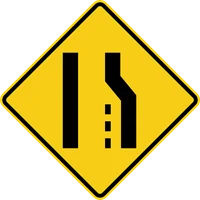
What is a zipper merge?
A zipper merge happens where two lanes become one, often at a work zone lane closure. Instead of everyone crowding into the open lane a mile early, drivers keep using both lanes up to the defined merge area. Once they get there, they alternate into the open lane, one from each side. That's how the Minnesota Department of Transportation, one of the states that has promoted it longest, describes it.
It can feel rude the first time. Driving past a line of cars to the end of a closing lane looks like cutting in. But when traffic is congested, that's exactly what transportation departments want: two full lanes feeding one, evenly.
Why the zipper merge works
According to Minnesota DOT, a zipper merge:
- Shortens the backup, by as much as 40 percent, because both lanes hold cars instead of one.
- Reduces the difference in speed between the two lanes, so there are fewer sudden stops and swerves.
- Feels fairer, because both lanes move at the same rate and nobody gains by jumping ahead.
Early merging in heavy traffic does the opposite. One lane fills up, the other sits empty, and drivers dart into the empty lane and then force their way back in at the last moment.
When to zipper merge, and when to merge early
The zipper merge is for congestion. When traffic is light and moving at highway speed, Minnesota DOT says it makes sense to move to the open lane sooner. In both cases, the rule underneath is the same: merge when it's safe.
| Traffic | What to do |
|---|---|
| Backed up or slow | Stay in your lane to the merge point, then take turns into the open lane. |
| Flowing freely at speed | Signal and move into the open lane sooner, when there's a safe gap. |
| Signs say where to merge | Follow the signs. Work zones often show where the merge point is. |
How to zipper merge, step by step
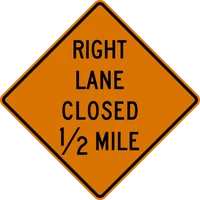
- Spot the warning early. A lane closed ahead or lane ends sign tells you a merge is coming.
- Stay in your lane if traffic is backed up. Don't swerve across late, and don't straddle both lanes to stop others from passing.
- Keep a steady, matching speed with the lane next to you as you both approach the merge point.
- Signal before the merge point so the driver next to you knows your plan.
- Check your mirror and blind spot, then take your turn: one car from your lane, one from theirs.
- If you're in the open lane, let one car in ahead of you, then keep moving. Don't speed up to close the gap.
Is the zipper merge the law?
Traffic law is set by each state, so the answer depends on where you drive. Three examples show the range:
- Utah: required at congested merges. Utah Code section 41-6a-903.1 says a driver "shall use the zipper method when merging at a congested merge point." The zipper method is defined as using both lanes until the merge point, then alternating yielding the right of way into the single lane. A violation is an infraction.
- Illinois: in the handbook by law. Illinois law requires the Secretary of State to include advice in the Rules of the Road handbook telling drivers to use the zipper merge when lanes are reduced: use both lanes to the lane reduction point, then merge there, alternating turns.
- Minnesota: promoted by the DOT. Minnesota's transportation department has long campaigned for the zipper merge in congested work zones, as guidance on how to drive.
In other states, the zipper merge may be encouraged, taught in the handbook, or not mentioned at all. Before your permit test, check what your state's driver handbook says about merging and lane reductions.
How to merge onto a highway
Merging from an on-ramp is a different situation. You're joining traffic that's already there, and the California Driver Handbook is clear that highway traffic has the right of way. Its advice:
- Use the ramp to get up to speed. Be at or near the speed of traffic when you merge.
- Signal and check. Use your mirrors and turn signal, and turn your head to look over your shoulder before you move over.
- Pick a big enough gap. Merge into a space large enough for your car to join the lane safely, and leave about three seconds to the car ahead.
- Don't stop on the ramp unless it's absolutely necessary. A stopped car at the end of a ramp has to merge from zero, into fast traffic.
- Don't cross solid lines to merge early.
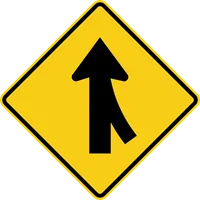
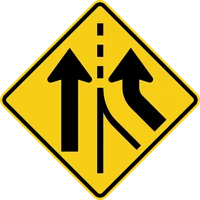
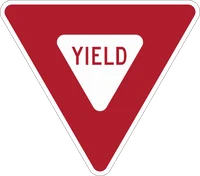
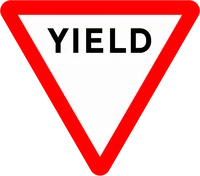
If you're already on the highway and see a merging traffic sign, watch the ramp. When it's safe, moving one lane over or adjusting your speed makes room for drivers joining. Treat other signs that mention yielding the same way: see what a yield sign means.
Common merging mistakes
- Merging early into a stopped line when traffic is backed up, leaving the other lane empty.
- Blocking the ending lane by straddling both lanes or pulling across to stop others passing.
- Racing to the front at high speed when traffic is light, then forcing your way in.
- Speeding up to close the gap when it's the other driver's turn.
- Skipping the head check. Mirrors alone miss cars in your blind spot.
On your road test
Examiners watch how you merge: whether you signal, check your mirrors and blind spot, match the speed of traffic and fit into a safe gap without forcing anyone to brake. Turn your head clearly so the examiner can see you look. For the rest of the test, read how to pass your road test.
Test yourself
Lane ends and merge signs turn up on permit tests in every state. Try the free US practice test, and see every warning sign in the US road signs guide.
This guide summarizes common rules. Laws vary by country, state and province, and change over time: check your official driver handbook. Learner Lane is not affiliated with any government licensing authority.