Driving anxiety as a learner: 12 ways to feel calmer behind the wheel
· 7 min read
Sweaty palms at a busy junction, a racing heart when a truck pulls up behind you, dread before every lesson: if that sounds familiar, you're in very good company. Most learner drivers feel nervous, and many feel genuinely scared. Driving anxiety is common, it's understandable, and for most people it's very fixable.
Why learning to drive feels so stressful
- Everything is new at once. Steering, speed, mirrors, signs and other drivers all compete for your attention before any of it is automatic.
- Mistakes feel high stakes. Unlike most things you learn, an error on the road can hurt someone.
- You feel watched. By your supervisor, by the cars behind you, and eventually by an examiner.
- A bad experience sticks. One near miss or one stall at a green light can color the next ten drives.
The good news: anxiety feeds on the unfamiliar. Every situation you handle calmly makes the next one smaller.
12 ways to feel calmer behind the wheel
1. Start where it's easy
An empty parking lot on a Sunday morning is the perfect classroom. Practice moving off, stopping, turning and reversing until your hands and feet know what to do without you thinking about it.
2. Build a ladder
Write down the situations that scare you, from least to most: quiet streets, a busier road, a four-lane road, the highway, rain, night. Work up one rung at a time, and only move up when the current rung feels routine.
3. Choose a calm supervisor
The person in the passenger seat matters. Someone who gasps, grabs the dashboard or criticizes every move raises your stress. Ask them to give instructions early, in a level voice. If it isn't working, try someone else or a professional instructor.
4. Plan the route before you go
Knowing where you'll turn takes away a lot of in-the-moment stress. Look at the route on a map first, and for the first few drives, pick routes with right turns rather than unprotected left turns.
5. Drive at quiet times
Early weekend mornings and mid-afternoon on weekdays have far less traffic than rush hour. Add busier times only when you're ready.
6. Breathe out longer than you breathe in
A slow breath in for about four counts and out for six tells your body to calm down. Do a few rounds before you start the engine, and at red lights. Relax your grip on the wheel and drop your shoulders while you're at it.
7. Talk through what you see
"Commentary driving" means saying out loud what you notice and what you'll do: "Pedestrian near the crosswalk, covering the brake. Green light, checking left." It keeps your attention on the road instead of on your worries, and it shows your supervisor what you're thinking.
8. Learn the rules until they're automatic
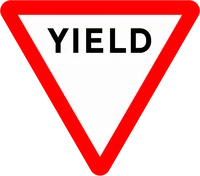
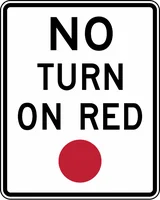
A lot of anxiety is not knowing what to do, like who goes first at a 4-way stop, or whether you can turn right on red. The more decisions you've already made in your head, the fewer you have to make under pressure.
9. Rehearse before you drive
Practicing a situation in your head, or in a simulator, before you meet it on the road takes away some of the fear of the unknown. That's the idea behind Learner Lane's 3D situations: you can get a merge or a busy junction wrong as many times as you like, with nothing at stake. Our hazard perception practice trains you to spot trouble early, which makes real traffic feel slower and more predictable.
10. It's fine to pull over
If you feel overwhelmed, signal, pull over somewhere safe and legal, and take a minute. That's not failure. It's exactly the kind of judgment safe drivers use.
11. Count your hours, not your mistakes
Logging your drives shows real progress on days when it doesn't feel like it. A driving hours log also covers the supervised hours most permits require.
12. Take care of the basics
Being tired, hungry or over-caffeinated makes anxiety worse. Sleep well before a lesson, eat something, and go easy on energy drinks.
Calming road test nerves
- Do a mock test with your supervisor on the roads around the test center, with them giving directions like an examiner would.
- Know what examiners look for. Our guide to passing your road test covers it.
- Arrive early, so you aren't rushing.
- Remember that one small mistake rarely fails you. Keep driving safely and focus on the next instruction.
When to get extra help
If your anxiety is so strong that you avoid driving entirely, have panic attacks behind the wheel, or it started after a crash, it's worth talking to a doctor or a therapist. Approaches such as cognitive behavioral therapy and gradual exposure are widely used for this kind of fear, and a driving instructor who works with nervous drivers can help alongside them.
This guide summarizes common rules. Laws vary by country, state and province, and change over time: check your official driver handbook. Learner Lane is not affiliated with any government licensing authority.