How to pass your road test the first time: 15 tips
· 8 min read
The road test (also called the driving test or behind-the-wheel test) isn't about driving perfectly. It's about driving safely, legally and visibly in control for about 15 to 25 minutes while someone writes down everything you do. Most failures come from a handful of predictable mistakes. Fix those, and you're most of the way to a pass.
Before test day
1. Meet the requirements early
Most states make you hold your permit for a minimum time and log supervised practice before you can book the road test. 50 hours with 10 at night is a common requirement for teens in the US, but it isn't universal. Check your state's handbook, and keep your log up to date as you go. Our driving hours log splits day and night automatically. Testing in New York? Our New York road test guide lists what to bring.
2. Practice in the car you'll test in
Learn exactly where its corners are, how hard its brakes bite and where every control is. Examiners often ask you to show the horn, wipers, defroster, headlights, hazard lights and parking brake before you leave.
3. Check the car will pass inspection
A broken brake light, a cracked windshield in your line of sight, a warning light on the dash or expired registration can end the test before it starts. Check every light the day before.
4. Drive the roads around the test center
Every test site has its quirks: an awkward four-way stop, a school zone, a tricky left turn. Practice on those roads at the same time of day as your appointment, so nothing on the route is new.
5. Practice every maneuver your state tests
Depending on where you test, that might be parallel parking, backing in a straight line, a three-point turn, parking on a hill or a quick stop. Practice each one until you can do it calmly, with observation all the way through.
During the test
6. Make your mirror checks obvious
The examiner can't score a check they don't see. Move your head, not just your eyes, for mirrors, and look over your shoulder for blind spots before every lane change, every pull-out from the curb and every merge.
7. Stop completely, behind the line
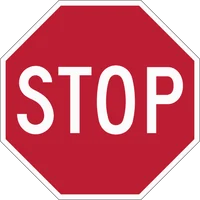
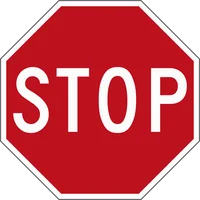
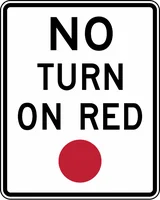
At every stop sign and red light, the wheels stop turning before the line or crosswalk. Count one second with the car still, then look. Rolling stops are among the most common reasons for failing. Brush up on the 4-way stop rules and right turn on red, because both come up on most routes.
8. Signal early, every time
Signal before every turn, lane change and pull-out, even when no one is around. Many states say at least 100 feet before a turn. Cancel the signal afterwards.
9. Keep to the limit, and don't crawl
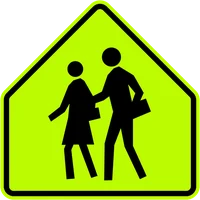
Watch for speed limit changes, especially school zones. Driving well below the limit for no reason also counts against you: it shows hesitation and holds up traffic.
10. Leave space
Keep at least a three-second gap to the car ahead, and more in rain. When you stop behind a car, you should see its rear tires touching the road.
11. Turn into the correct lane
Finish a right turn in the right-hand lane and a left turn in the lane nearest the center line. Don't swing wide, and don't cut the corner.
12. Yield when you should, and only then
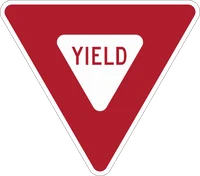
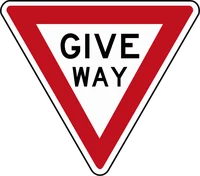
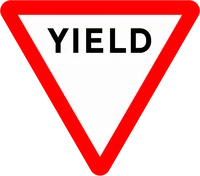
Give way to pedestrians at crosswalks, to traffic with the right of way, and to emergency vehicles. But don't wave people through when it's your turn. Unnecessary hesitation is marked down too.
13. Keep scanning ahead
Look 12 to 15 seconds down the road: brake lights, a ball rolling out, a car door opening, a pedestrian about to cross. Spotting a hazard early is what lets you react smoothly instead of braking hard. Hazard perception practice trains exactly that.
14. Ask if you didn't hear an instruction
You're allowed to ask the examiner to repeat a direction. Taking a wrong turn safely isn't a fault, but a sudden, unsafe lane change to make the turn is.
15. Shake off a mistake
A single minor error almost never fails you by itself. Panicking over it and making three more does. Breathe, and focus on the next turn. If test nerves are a big problem for you, read our guide to driving anxiety.
Mistakes that can fail you on the spot
In most states, these end the test or fail it outright:
- Running a stop sign or red light, including a rolling stop at a red light before turning
- Failing to yield so the examiner has to brake, grab the wheel or warn you
- Hitting a curb hard, an object or another vehicle
- Driving well over the speed limit, especially in a school zone
- Any dangerous maneuver, or not wearing a seat belt
Test-day checklist
- Permit, ID, any required forms and your hours log
- Registration and proof of insurance for the car
- A licensed supervising driver, if your state needs one to bring you
- Lights, signals, horn, wipers and brakes all working
- Arrive early, adjust your seat and mirrors, and put your phone away
Full list, with the vehicle check examiners run before you drive: what to bring to your driving test.
If you don't pass
You'll usually get a score sheet showing exactly what went wrong, and most states let you retake the test after a waiting period. Treat the sheet as a practice plan: work on those exact points, and book again.
Know the rules cold
You'll make better decisions on the road when you don't have to think about the rules. Run through the free US practice test and the US road signs until every answer is automatic.
This guide summarizes common rules. Laws vary by country, state and province, and change over time: check your official driver handbook. Learner Lane is not affiliated with any government licensing authority.