Right of way rules: who goes first, at every kind of intersection
· 7 min read
Right of way rules decide who goes first when two road users want the same space. Strictly speaking, the law doesn't hand anyone the right of way. It tells drivers who must yield. That matters, because the most important rule of all is that right of way is something you give, never something you take. Here are the rules for every situation on the permit test, with answers first.
Who has the right of way?
Whoever the signs, signals or rules say should go first, and only once the other driver actually lets them. Check the situation in this order:
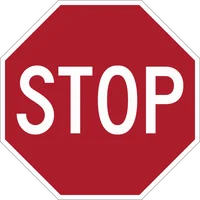
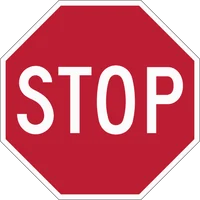
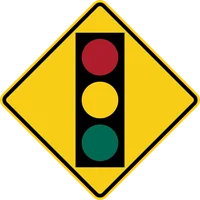
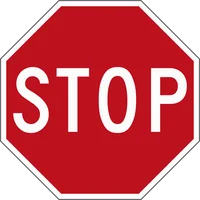
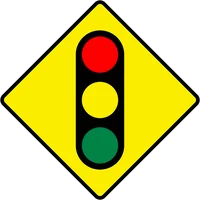
- Traffic signals and signs. A green light, a STOP sign or a YIELD sign settles most cases.
- Who is already there. New York's driver manual says a driver approaching an intersection must yield to traffic that is already in it.
- The default rules for uncontrolled intersections, T intersections, left turns and the other situations below.
Even then, nothing is guaranteed. The California Driver Handbook tells drivers to never assume that others will give them the right of way, and to give up their right of way when it will help prevent a collision.
Uncontrolled intersection: who goes first?
An uncontrolled intersection has no signs or signals telling anyone to stop or yield. The rule is the same in the handbooks we checked:
- The first vehicle to arrive goes first (California).
- If two vehicles arrive at the same time, the vehicle on the right goes first. In New York's words, the driver on the left must yield to the driver on the right.
- A vehicle already in the intersection has priority over one still approaching.
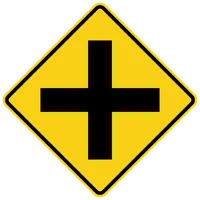
Slow down well before you get there, because you may have to stop for a car on your right. California calls an intersection with no stop signs at any corner a blind intersection and sets its speed limit at 15 mph. If your view is blocked, creep forward slowly until you can see.
Some states add tie-breakers for roads of different sizes. Texas law (Transportation Code §545.151) says a driver on a one- or two-lane road yields to traffic on a divided highway or a road with three or more marked lanes, and a driver on an unpaved road yields to traffic on a paved one. Check your own state's handbook for local rules like these.
Who has the right of way at a T intersection?
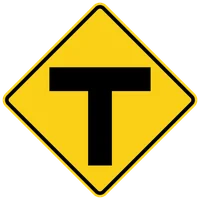
Traffic on the through road. At a T intersection, one road ends and the other carries on. If there is no STOP or YIELD sign, the California Driver Handbook says vehicles, bicyclists and pedestrians on the through road have the right of way. Texas law puts it the same way: a driver on the road that ends at the intersection must stop and yield to vehicles on the other road that are in the intersection or close enough to be a hazard.
So if your road is the one that ends, you wait, even if a car on the through road is approaching from your left. If there is a sign or signal, it overrides this rule.
Right of way when turning left
Oncoming traffic and pedestrians go first. New York's manual says a driver turning left must yield to traffic that is going straight or turning right from the opposite direction, and to any oncoming traffic close enough to be a hazard. California says the same: give the right of way to any pedestrian or approaching vehicle that is close enough to be dangerous.
- On a plain green light, you may turn left, but you must wait for a safe gap in oncoming traffic. A sign that reads LEFT TURN YIELD ON GREEN is a reminder of this rule.
- On a green arrow, the turn is protected, but still watch for pedestrians and anyone running the light.
- Turning left into a driveway or parking lot works the same way. New York's manual says you must yield to oncoming traffic here too.
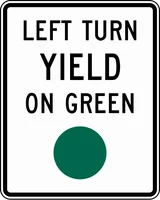
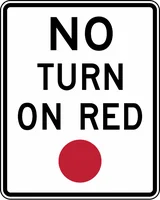
Turning right has its own trap: before you turn, California tells drivers to check for pedestrians, and for motorcycles and bicycles riding next to you. For turns at a red light, read right turn on red.
4-way stops
At an all-way stop, everyone stops, then the first to stop goes first and a tie goes to the car on the right. Every case, including three or four cars at once, is in our guide to 4-way stop rules.
Yield signs
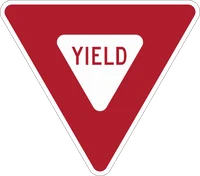
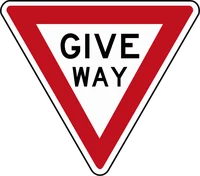
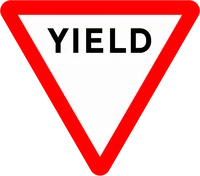
A yield sign means the traffic and pedestrians on the road you're entering have the right of way: slow down, and stop only if you need to. See what a yield sign means for yield ahead signs, yield lines and the difference from a stop sign.
Pedestrians and crosswalks
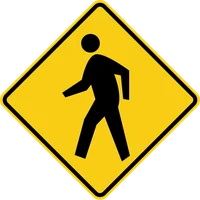
Drivers must yield to pedestrians who are legally using a marked or unmarked crosswalk. An unmarked crosswalk is the place where a crosswalk would be at an intersection, even with no paint. The rules learners most often miss:
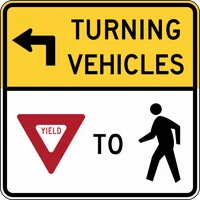
- Turning. New York's manual says you must yield to pedestrians in the crosswalks on your left or right before you turn.
- Green lights. A green light lets you go, but California's handbook still says to proceed with caution because pedestrians have the right of way.
- Blind pedestrians. In California, a pedestrian using a guide dog or a white cane has the right of way at all times.
- Eye contact. If a pedestrian at the curb makes eye contact with you, California tells drivers to yield to them.
Emergency vehicles
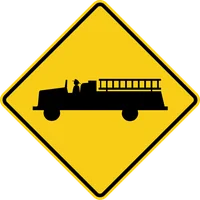
Fire engines, ambulances and police vehicles using their sirens and red lights get the right of way over everyone. California's handbook says to drive to the right edge of the road and stop until they have passed. New York's manual adds that you must pull over and stop even when the emergency vehicle is coming toward you in the opposite lane.
- If you're in an intersection, don't stop in it. Drive through, then pull to the right as soon as it's safe and stop.
- Don't follow. In California it's illegal to follow within 300 feet of a fire engine with its siren or lights on.
- Passing a stopped emergency vehicle with flashing lights? California tells drivers to move away from it and slow down. Many states have a specific "move over" law for this, so check yours.
Roundabouts
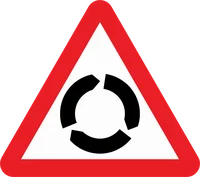
Traffic already in the roundabout has the right of way. Both California and New York tell drivers to yield to everyone already circulating. Enter to the right when there's a big enough gap, and travel counter-clockwise. Every roundabout entry has a yield sign for exactly this reason.
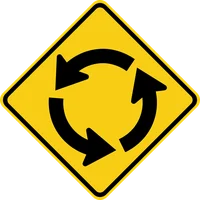
Driveways, alleys and parking lots
The driver coming out yields. New York's manual says a vehicle entering a road from a driveway, alley or private road must stop and yield to traffic on the road and to pedestrians. That includes people on the sidewalk you cross on the way out. Edge forward slowly when hedges or parked cars block your view.
Merging and entering traffic
When you join a road, from an on-ramp, a side street or the shoulder, the traffic already there has the right of way. California's handbook says to yield to the traffic already occupying the lanes. Match its speed, find a gap, and don't force anyone to brake for you.
Right of way rules at a glance
| Situation | Who goes first |
|---|---|
| Signs or signals | Follow them. They override the default rules |
| A vehicle already in the intersection | That vehicle |
| Uncontrolled intersection | The first to arrive. Arrive together: the vehicle on the right |
| T intersection, no signs | Traffic on the through road |
| 4-way stop | The first to stop. A tie: the vehicle on the right |
| Turning left | Oncoming traffic going straight or turning right, and pedestrians |
| Crosswalk, marked or unmarked | Pedestrians |
| Roundabout | Traffic already in the roundabout |
| Leaving a driveway or alley | Traffic on the road and pedestrians |
| Merging or entering traffic | Traffic already in the lanes |
| Emergency vehicle with siren and lights | The emergency vehicle. Pull right and stop |
Right of way is given, not taken
Having the right of way doesn't make it safe to go. Another driver may not have seen you, or may not know the rule. Before you pull out, make sure the other driver is actually yielding: they're slowing or stopped, and ideally you've made eye contact. On a road test, examiners watch for exactly this. Turn your head so they can see you check, and don't insist on your turn when someone else has clearly taken it.
Right-of-way laws differ in the details from state to state, so read your state's driver handbook before your test. For everything else examiners look for, see how to pass your road test.
Test yourself
Right-of-way questions appear on every state's permit test. Try them in the free US practice test, and learn the warning signs that tell you an intersection is coming in the US road signs guide.
This guide summarizes common rules. Laws vary by country, state and province, and change over time: check your official driver handbook. Learner Lane is not affiliated with any government licensing authority.