NSW driving test: who can sit it, how it's scored and why people fail
· 10 min read
The NSW driving test is the last step between your learner licence and your red Ps. It's a practical, on-road drive test with a Service NSW testing officer, and a single fail item sinks the test even if the rest of your drive is excellent. Here's who can book it, how the drive test in NSW is scored, the official list of fail items, what to bring, and what your car needs, all checked against Transport for NSW.
Who can take the driving test in NSW?
The official Driving Test page sets different rules depending on your age:
| Requirement | Under 25 | 25 or older |
|---|---|---|
| Minimum age | 17 | No extra requirement |
| Time on your learner licence | At least 12 months | None |
| Logged supervised driving | At least 120 hours, including 20 at night | Not required |
| Hazard Perception Test | Passed | Passed |
Night hours are those driven between sunset and sunrise. If you use the Roundtrip log book app, submit it at least 48 hours before your test. Keeping a driving hours log as you go, with day and night split, makes it easy to see when you've hit 120.
There's no pressure to book the moment you're eligible. Transport for NSW says you can keep practising on your Ls for as long as you need, and to test only when you feel confident driving without a supervisor.
Every Australian state and territory runs its own licence tests, so if you're learning outside NSW the rules below won't match yours.
The Hazard Perception Test comes first
The Hazard Perception Test (HPT) is a computer test at a service centre that checks how well you recognise potentially dangerous situations. You watch 15 short videos, after 2 practice videos, and touch the screen to show when you would slow down, overtake or turn at an intersection. The clips focus on common crash situations for provisional drivers.
- Under 25: you can sit it after 10 months on your Ls. If you're 25 or older, you can take it as soon as you have your learner licence.
- It lasts 15 months. If you don't pass the driving test within 15 months of passing the HPT, you have to pass the HPT again, so book it when you're close to ready for the drive.
- Retakes: as many as you need, paying the fee each time ($58 at the time of writing).
Transport for NSW says third-party HPT practice tests aren't the same as the NSW HPT, and that the way to prepare is its Hazard Perception Handbook. Read that first. Our general hazard perception guide explains what a developing hazard is, which matters on the drive itself: the NSW driving test focuses on how you perceive hazards and respond to them.
How to book the NSW driving test
Book and pay through Service NSW online, by calling 13 22 13, or at a service centre, and choose the service centre where you want to sit the test. The online system shows appointments for the next 4 weeks and is updated weekly, so if nothing suits, check again in a few days or try another centre. To change or cancel, do it at least 48 hours before the test, or your fee may not be transferred or refunded.
What happens on the day
- Arrive at least 15 minutes early with someone who holds a full driver licence. If you fail, you can't drive away on your own.
- Park in the Driving Test parking area and report to the concierge or counter. Hand over your log book if you have one.
- The testing officer calls you. You can ask questions about the test first. When you sign the score sheet, the test has started.
- You drive. Only you and the testing officer are in the car, sometimes with a monitoring officer who checks the test is run properly. The officer directs the route but can't coach you.
- You get your result back at the service centre, with a test report showing your score.
What the NSW driving test assesses
According to A Guide to the Driving Test, the test is a set course over 25 zones. The testing officer scores you on five key performance indicators, and you need at least 90 per cent with no fail items to pass.
| What's scored | What the officer looks for |
|---|---|
| Speed management | A gap of at least 3 seconds to the car in front, slowing when your view or space is limited, and keeping up with traffic when conditions allow |
| Road positioning | A safe, legal path: space from parked and oncoming cars, staying out of blind spots, safe approaches and exits at intersections, accurate parking |
| Decision making | Safe, legal gaps when joining traffic, changing lanes and merging, and clearing intersections 3 seconds before another vehicle arrives |
| Responding to hazards | Covering the brake, easing off, slowing or moving away when something could enter your space |
| Vehicle control | Smooth use of the seat, accelerator, brakes, gears, steering, controls and signals |
You'll also be asked to do some manoeuvres chosen from a kerbside stop, a hill start, a 3-point turn and parking (reverse parallel, 90-degree or 45-degree, front or rear to the kerb, depending on what's near the centre). When you park, you must finish less than 500 mm from the kerb and use no more than 4 changes of direction. A 3-point turn allows up to 5, but if three is possible, you're expected to do it in three.
Why people fail: the official list of fail items
Breaking road rules or following too closely counts as high-risk driving, and you won't pass, whatever your overall score. If you commit a fail item the test usually continues so you get a full assessment, but the result is a fail. These are the 19 fail items in the official guide, with its examples:
| Fail item | Examples |
|---|---|
| Disobeying traffic signs, signals or road markings | Not stopping at a red light, or at a yellow when you could stop safely; stopping more than 1 m from a stop line or over it; crossing a continuous line unnecessarily |
| Failing to give way when necessary | To a vehicle with priority at an intersection, to pedestrians at marked crossings and intersections, or when merging and changing lanes |
| Colliding with a vehicle, pedestrian or object | Includes mounting the kerb or a roundabout and straddling a traffic dome. Touching the kerb face with a wheel isn't a fail |
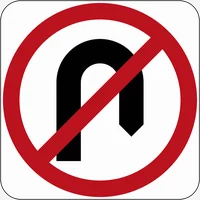
| Performing an illegal act or manoeuvre | Turning from the wrong lane, an unlawful U-turn, the wrong lane at a roundabout, no seatbelt, using a mobile phone |
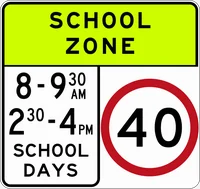
| Exceeding the speed limit | At any time, including school zones, the learner limit and roadworks |
| Action requiring testing officer intervention | Any verbal or physical help, including the dual controls in an instructor's car |
| Causing a dangerous situation | Such as overtaking unsafely, or giving way when you didn't need to |
| Failing to maintain proper control of the vehicle | Rolling back more than 500 mm when moving off, skidding, coasting |
| Failing to exercise due care to avoid an accident | Not being ready when a situation needs your response |
| Failing to give way to an emergency vehicle | Not moving out of its way |
| Disobeying directions from a person controlling traffic | Police, emergency services, or a traffic controller at roadworks |
| Frequently not signalling intention | For example, not signalling for at least 5 seconds before leaving the kerb or a parking space |
| Refusing to attempt any part of the test | You must complete the whole test to pass |
| Repeated or deliberate failure to follow directions | Not following the testing officer's reasonable directions |
| Unreasonably obstructing other vehicles or pedestrians | Blocking an intersection, or driving well below the limit when conditions don't call for it |
| Receiving external advice or instruction during the test | Any help from a third party from the moment you sign the score sheet |
| Not parking to the required standard | Ending more than 1 m from the kerb, wheels on or over parking lines, or reversing more than 7 m from the car in front |
| Failing to maintain a safe following distance | Following too closely behind the vehicle in front |
| Frequently not performing observation checks | No head check before leaving the kerb, merging, changing lanes, reversing, turning, or crossing lanes to exit a roundabout |
Most of these come down to signs, signals and speed limits you already know. Three that catch learners out on the day:

Immediate fail and test termination
An immediate fail ends the test on the spot, and the testing officer may drive you back. It can happen if you do something unsafe that puts the public in obvious danger, or refuse to cooperate. A test can also be terminated for reasons that aren't about your driving: a car that doesn't meet the rules, missing documents, an incomplete log book, suspected alcohol or drugs, offering a bribe, a crash (whoever is at fault), illness or bad weather. When a test is terminated, your booking fee isn't refunded.
What to bring to the NSW driving test
- Proof of identity: your learner licence (or interstate or overseas licence with any extra documents needed).
- A completed Licence Application form.
- Your glasses or contact lenses, if you need them to drive or for the eyesight test.
- Payment or a concession card for your licence fee if you pass. Some service centres only take cards.
- Your completed Learner Driver Log Book (under 25 only), with your 120 hours, the 20 learning goals and the Declaration of Completion signed by a supervising driver, or your app hours submitted 48 hours ahead.
- A registered, roadworthy car, and a fully licensed driver to come with you.
Car requirements
You bring the car, and the testing officer checks it before you start. If something can't be fixed in time, the test is terminated and you pay to rebook. Going by the official page and guide, the car must:
- be registered and the right type for the test
- have working seatbelts, including a lap-sash belt for the testing officer, and head restraints
- have working indicators (including side repeaters) and brake lights, with no broken lenses
- have legal tyres and wheels, no cracks in the windscreen that block either person's view, and no broken or distorting mirrors
- have no sharp edges from body damage, and a working front passenger door handle and window switch
- be clean, with any loose items secured
- if it has dual controls, have a working dual brake and the dual accelerator disabled
- not have equipment that can record the test, including images, sound or the car's position
Driver assistance: safety systems such as autonomous emergency braking and traction control must stay on, and you must show you can drive safely without relying on them. Park assist must be switched off for the reversing manoeuvres. Reversing cameras and sensors are allowed, but you still check your mirrors and look around. If the car has an affected Takata airbag, the test won't go ahead until it's replaced.
If you pass, or if you fail
If you pass, you pay for your provisional P1 licence (that's why you bring payment). You no longer need a log book or a supervisor. P1 drivers display a red P plate, can't drive faster than 90 km/h, and have other restrictions, such as how many passengers they can carry. The P1 licence is valid for 18 months, and you can move to a P2 after 12 months.
If you fail, the testing officer gives general comments rather than a replay of the drive, plus a copy of your score sheet showing what to work on. You must wait at least 7 days before your next test and pay the fee again, but you don't need to log more hours.
| Fee (at the time of writing, October 2026) | Amount |
|---|---|
| Hazard Perception Test, each attempt | $58 |
| Driving test (car), each attempt | $72 (inc GST) |
| Provisional P1 licence (car) | $74 |
These are the fees effective from 1 July 2026. Check the official page for current prices.
8 tips to pass your NSW driving test
- Keep 3 seconds behind. Pick a pole or sign and count. Following too closely is a fail item on its own, and you need more space in rain or when someone tailgates you.
- Turn your head, every time. Before leaving the kerb, changing lanes, merging, reversing, turning and crossing lanes to leave a roundabout, and when moving off at lights or level crossings. Mirrors alone aren't enough.
- Stop properly. At a stop sign or line, stop completely, no part of the car over the line, and within 1 m of it. If you stop short, move up.
- Signal early. At least 5 seconds before leaving the kerb or a parking space, and when leaving a roundabout.
- Know the limit everywhere. School zones during their hours, 40 km/h past a bus with flashing lights, 40 km/h past a stopped emergency vehicle with flashing lights where the limit is 80 km/h or less, roadworks, and your 90 km/h learner limit.
- Don't be too cautious. Rejecting safe gaps, stopping when it's clearly safe to go, or driving well under the limit for no reason can also cost you.
- Drill the manoeuvres in the car you'll test in: kerbside stop, hill start, 3-point turn and every type of parking, close to the kerb and inside the lines.
- Let your supervisor drive home. The guide suggests it whatever the result, because after the test many learners find it hard to concentrate.
How Learner Lane helps, and what it isn't
Learner Lane is an independent app, not connected to Transport for NSW or Service NSW, and it can't guarantee a pass. What it does is put the rules the testing officer scores into short 3D driving situations, with real Australian signs and rules: you make the call, see the consequence and rewind. Its hazard perception clips are generated fresh every time, so you practise spotting hazards rather than memorising clips. They aren't in the NSW HPT format, so use the official handbook for that.
It also logs your supervised day and night hours towards 120 (as a tracker, not an official log book, so keep using your paper log book or Roundtrip), and plans practice routes on real roads around your test centre with turn-by-turn voice directions. They're practice loops, not the official test course. It's free to start, and a one-time Pass Pass purchase unlocks everything. Still on your Ls? Start with our NSW Driver Knowledge Test guide, the free Australia practice test and the Australian road signs list.
Facts from Transport for NSW and Service NSW: the Driving Test and Hazard Perception Test pages, A Guide to the Driving Test, the fees page and the Road User Handbook, checked 27 October 2026. Learner Lane is not affiliated with Transport for NSW or Service NSW.
This guide summarizes common rules. Laws vary by country, state and province, and change over time: check your official driver handbook. Learner Lane is not affiliated with any government licensing authority.